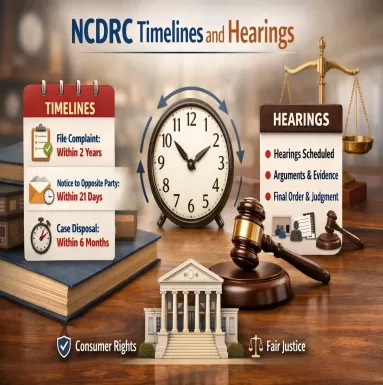
NCDRC Timelines and Hearings
The first thing people usually ask when they file a consumer complaint with the National Consumer Disputes Redressal Commission is simple and important. How long will my case take, and what happens on the day of each hearing? That worry is real because the NCDRC case timeline can be hard to understand for families, homebuyers, patients, insured people, and business owners who are already under a lot of financial stress. A consumer case timeline national commission matter isn't just about the legal paperwork. It's also about managing records, planning money, getting ready for every hearing without panicking, and making sure you can respond to every question.
For most people who are in court, delay is a problem for them personally as well as legally. A pending refund, compensation dispute, insurance claim, housing issue, or service deficiency case can change how much you have to pay for school, medical care, loans, and business working capital. This is why it's important to get clear instructions from the start. NCDRC Lawyers and Advocate BK Singh often help clients understand how the file is really moving, what each hearing is for, what the documents do, and what they can do to speed things up without making the case less clear before the National Commission.
1. What an NCDRC case timeline usually means
A timeline for an NCDRC case is not a set calendar that moves at the same speed for every case. The length of time it takes to reach the National Commission depends on the type of dispute, the stage of the case, the completeness of the filing, the number of opposing parties, the service of notice, the filing of a reply, the record of documents, and the court board on a given date. Some things happen faster because the paperwork is in order and the problem is small. Some cases take longer because the parties keep filing more papers, asking for more time, or raising maintainability objections before the main issue is even brought up.
A consumer case timeline national commission matter usually goes through steps that can be seen, such as filing scrutiny, an admission-related hearing, a notice, a reply, a rejoinder, evidence-related material, short arguments, a final hearing, and an order. The timeline for appeals also depends on whether the challenge is only about a legal issue or if the record from the State Commission needs to be looked at closely. A good lawyer doesn't promise to finish things too quickly. Instead, the best thing to do is to get the case ready so that each hearing has a purpose and the case doesn't lose its momentum.
2. Filing stage and first look at the national commission
A lot of clients don't realize how important the filing stage is. If the petition, annexures, index, limitation details, authorization papers, certified copies, or fee-related documents are not complete, the case could lose weeks or even months. People often think that filing means the case has fully begun, but the court system actually checks to see if the case is in the right form first. If there are problems, the party may need to fix them before things can go smoothly. That's why getting ready before filing often takes less time than rushing after filing.
At this point, Advocate BK Singh usually tells clients to think of documents as the most important part of the case. A buyer in a flat possession dispute may need allotment papers, payment receipts, communications from the builder, and previous orders. A person who is complaining about insurance may need copies of their policy, letters of denial, claim papers, and medical or survey reports. A small business that is involved in a service deficiency case may need receipts, emails, and information about the loss. Strong filing discipline makes it easier for the matter to get into the hearing stream, which is often the first step toward a better NCDRC hearing experience.
3. Notice of admission and early hearing movement
After filing scrutiny, the case may go to admission or an early consideration stage, depending on what kind of case it is. This is where the Commission decides how to move forward with the case based on its basic maintainability. In consumer lawsuits, the parties usually want a full hearing right away, but the early dates are usually limited and procedural. They may include checking to see if the case is within jurisdiction, if the petition is within the time limit, if notice should be given, and if the case record is complete enough to move forward in an orderly way.
This stage can seem slow to clients because the first few hearing dates may not seem very exciting. These dates are very important, though. If you miss a defect, give a weak reason for the delay, or write a bad appeal, you could run into problems later. Lawyers from the NCDRC often say that the early phase is when the case's structure is set. If you handle it right, it will be easier to argue about later. If you don't take care of it, even a strong complaint can get stuck in procedural objections that waste time and make you lose faith.
4. How hearing dates really work in real life
A lot of people think that every hearing date means long arguments and quick progress, but that's not how consumer litigation usually works. Some dates are for filing an admission, some are for giving notice, some are for replying, some are for rejoinder, and some are for final arguments. The issue is often called up quickly, instructions are given, and the next date is set for compliance. This doesn't always mean that the case is weak. When there are a lot of documents, different parties, or records from lower commissions involved, it usually means that the Commission is moving the file step by step.
In real life, the most important question isn't whether there was a hearing, but what was accomplished during that hearing. Did the other side file a response? Was the delay okay? Was the issue accepted? Were written arguments put on file? Was the case set for final resolution? These are the important dates in a real NCDRC case timeline. This is how Advocate BK Singh usually helps clients keep track of hearings so they know what each date means in terms of the law instead of just being upset that the case wasn't fully argued at every appearance.
5. Common reasons why NCDRC cases take longer than expected
There are usually a few reasons why NCDRC hearings are delayed. One of the main reasons is that the records are not complete. When notice hasn't been properly filled out on the other side, service delays are another common problem. Parties asking for more time, changing lawyers, filing a lot of documents, settlement talks that aren't going anywhere, and problems with annexes can all make the timeline longer. When it comes to appeals, the National Commission may need more time to carefully consider the case if the lower commission record is long or the issue involves both facts and law.
There are also delays in litigation that clients can't see but are very real. Some dates may be taken up by clarifying maintainability, and some cases move more slowly because the dispute involves technical material like construction defects, medical negligence papers, or detailed financial claims. This is why strategy-based case handling is good for middle-class families and small businesses. A careful legal team can't control every factor that goes into a listing, but it can speed things up by filing correctly, responding to objections quickly, and keeping the case on track.
6. How clients can get ready for each hearing date
Getting ready for an NCDRC hearing starts long before the day of the hearing. Clients should keep all of their documents in chronological order, keep proof of payment, keep complaint emails, collect courier receipts, and not change the facts from one filing to the next. If the case is about a housing dispute, letters about possession offers, payment schedules, delays, and maintenance requests should all be neatly organized. If it's about insurance, you should have the claim form, the letter of denial, the treatment records, the survey documents, and the policy wording ready to look up quickly.
Getting ready emotionally is just as important. After every adjournment, a lot of people who are involved in a lawsuit feel nervous and think something has gone wrong. A hearing can be helpful even if it is short. The most important thing is that the case is following the right steps. NCDRC lawyers often help their clients by explaining what is happening in court in simple terms. Clients feel more in control and make better choices about documents, settlement talks, and long-term expectations when they know why the next date is set and what needs to happen before that date.
7. Appeals, changes to the case, and what to expect at the final hearing
A lot of the time, the consumer case timeline national commission process is made up of appeals or revisions, not just original complaints. The National Commission often looks at whether the lower forum made a legal or procedural mistake, whether the jurisdiction was used correctly, and whether the order should be changed in these cases. This means that the hearing style is different from a new complaint. The focus may be smaller, but the quality of the drafting and the clarity of the grounds are even more important because the Commission isn't starting the whole case over again.
Clients should also know that the final hearing doesn't always mean that the judge will give a spoken decision right away in open court. There are times when arguments end and the order is kept. Written submissions are sometimes put on record. Sometimes, the Bench hears a preliminary issue first in a limited way. This is standard in appellate consumer law. Advocate BK Singh usually gets clients ready for these things so that their hopes stay realistic. To do well in a final hearing, you need a clean record, clear legal points, and the ability to present the case in a focused way without repeating yourself too much.
8. Why having practical legal help is important in cases with strict deadlines
When money is frozen, property delivery is delayed, or compensation is still being worked out, managing the timeline becomes a part of the legal strategy itself. Panic, random filings, and promises that are too big don't help a consumer issue. Clear documentation, setting realistic expectations, following procedures quickly, and strong follow-up at every step all help. That is why people who want to know when the NCDRC hearings are, how long it takes to file a complaint, or how long a case takes in the National Commission usually need more than general information. They need specific, useful advice based on the details of their case.
Clients often choose NCDRC Lawyers and Advocate BK Singh for these kinds of cases because they want clear answers, not confusion. They want to know what stage their case is in, what the next hearing will be about, what risk points need to be fixed, and what papers can help the case move along faster. This kind of case handling is especially helpful for middle-class people and small businesses because delays cost them money. Planning ahead, being responsive in communication, and being disciplined in how you present can make the NCDRC process seem much easier and less scary.
Reviews from Clients
*****
Ritika Saran
I was very worried about my consumer case because I didn't know how NCDRC hearings worked. Advocate BK Singh broke down each step in simple terms and helped me understand what each date meant. That clarity made a big difference. I stopped feeling lost and started feeling ready.
*****
Harsh Vardhan
Before I got good advice, my case had already been delayed too long. The calm and practical way they handled things was what I liked best. Advocate BK Singh didn't make big promises. He looked over the papers, pointed out what was missing, and gave me a clear plan for what the National Commission should do next.
*****
Neelima Kapoor
I had been looking for real help with the national commission process for consumer cases, but most of what I found online was unclear. I learned a lot more about the filing, notice, reply, and final hearing stages from NCDRC lawyers. The advice was patient, professional, and easy for someone who isn't a lawyer to understand.
*****
Samarjeet Dutta
The focus on documents and getting ready for hearings really stood out to me. Instead of giving me general advice, Advocate BK Singh pointed out the specific weak points in my file and told me how to fix them. That practical advice made me feel better about myself before each hearing.
*****
Megha Talreja
I was dealing with a customer complaint and managing my family's money at the same time, so the delay was hurting me both emotionally and financially. The help I got was fair and realistic. The lawyers at NCDRC helped me figure out the likely timeline, the purpose of each date, and how to stay ready without getting too stressed.
?FAQs
Q1. How long does it usually take for an NCDRC case to be heard?
There isn't a set time frame for every case. The timeline is based on the type of petition, the quality of the documents, the service of the notice, the filing of the reply, any adjournments, and the stage at which the case reaches the National Commission. Some cases move along at a steady pace, while others slow down because there are gaps in the process.
Q2. What happens at the first NCDRC hearing?
The first hearing is not always the last argument. It could include looking at the admission process, checking on maintainability, or giving instructions on how to file and give notice. Clients should see the first date as an important step in the process, not as the end of the road.
Q3. Can the national commission process take longer if there are repeated delays?
Yes, if the case keeps getting put off, it can take a long time. When people don't file their replies on time, ask for extra time, or bring incomplete records, the delay often gets worse. A disciplined approach from the start usually helps cut down on delays that could have been avoided.
Q4. Does NCDRC hear cases in person or online?
The NCDRC has used both virtual and hybrid hearing arrangements through its cause list system. The type of hearing depends on the current listing practice and the specific Bench. Before the hearing date, it's important to double-check the listing details.
Q5. How do I find out when my next hearing date is in a consumer case?
The official NCDRC systems have tools for cause lists and case inquiries. The IVRS information page says that users can see information like the date of filing, the status of the case, and the date of the next hearing. Your legal team should also keep an eye on the listing all the time.
Q6. Are all NCDRC hearings for final arguments?
No, a lot of hearing dates are just for procedures. Some are for notice, some are for reply, some are for fixing problems, and some are for writing submissions. Final arguments usually don't happen until the case is ready to move forward.
Q7. What papers do you need to move forward faster?
The core proof papers that back up your complaint and timeline are the most important documents. Depending on the disagreement, these could be payment receipts, copies of agreements, policy papers, order copies, emails, notices, claim records, and previous commission documents.
Q8. Can a weak filing make a strong case go more slowly?
Yes, even a real case can take longer if the filing is missing information or is poorly organized. If there are missing annexures, bad pagination, a weak explanation of the limits, or unclear grounds, people may file objections over and over again and lose their hearing.
Q9. Why do clients like to get legal help with NCDRC deadlines and hearings?
This is because the process is both legal and procedural. A lawyer helps the client understand what happened, what needs to happen next, and what needs to be filed on time. That makes things less confusing and keeps the case from making mistakes that could have been avoided.
Q10. Can small businesses also use NCDRC remedies in cases that are right for consumers?
In appropriate instances where the legal circumstances justify consumer jurisdiction, small business proprietors may pursue remedies contingent upon the acquisition and utilization of goods or services. It is important to check the facts carefully because the type and purpose of the transaction can affect whether it can be maintained.
Are you having a legal problem in NCDRC Timelines and Hearings? You don't have to deal with it alone. Let's discuss your situation and explore the appropriate approach to handle it.
There is no pressure or difficult legal language, only clear information based on the circumstances of your NCDRC Timelines and Hearings matter.
Chat on WhatsApp +91-9654251599Schedule Your Consultation
