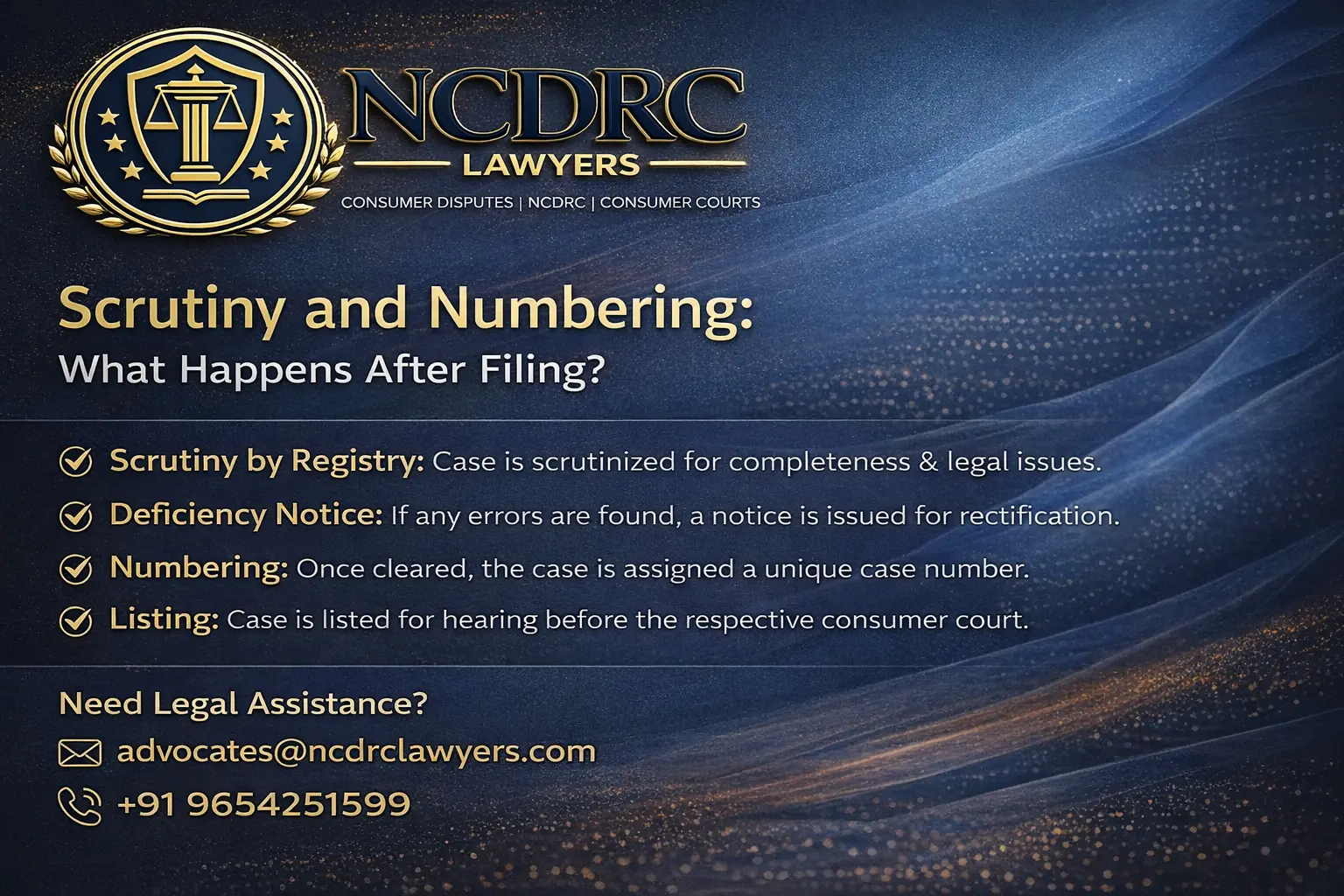
Many litigants think filing is the finish line for paperwork and the starting point of hearings. In reality, filing is only the beginning. What happens next is often less dramatic but far more important: scrutiny, objections if any, defect correction, and then numbering or registration. That is why the phrase scrutiny and numbering after filing matters so much in real court practice. If you have ever asked, “I filed my case, now what?”, you are not alone. Clients usually want to know whether the case has been accepted, whether a diary number means the matter is live, why the file is still under scrutiny, and when the real case number will come. Those are practical questions, and they deserve practical answers. Official court systems in India publicly distinguish between filing-stage identifiers like a diary number and later searchable registration details like case number or case registration number. When a case is submitted, the court or commission does not automatically treat it as a fully registered matter. Filing usually creates an entry in the system, but the papers still need to pass administrative and procedural review. That is the core of the court filing scrutiny process. In the e-Filing system, the judiciary describes e-filing as an end-to-end solution for filing plaints, written statements, replies, and applications, but submission is still only one stage in the lifecycle. This is where many litigants get confused. They assume that once the upload is complete or the filing counter has accepted the papers, the court will immediately assign a final case number. Often that does not happen on day one. A filing may first receive a temporary tracking identity or appear at a preliminary stage before it becomes a formally numbered case. The Supreme Court’s public case-status system separately allows searches by diary number and by case number, which itself shows that these are not the same thing. In simple terms, scrutiny is the court registry’s review of the filed set to see whether the matter is in order for registration. That review is not the final hearing on merits. It is an administrative check of the filing set. This is the stage where questions commonly arise about missing pages, incomplete annexures, improper indexing, affidavit issues, insufficient copies where applicable, wrong formatting, unclear authorization, limitation-related paperwork, or other office objections. The official NCDRC regulations state that if there is any defect in the filing of a complaint, appeal, or revision petition, the particulars of such defects shall be recorded and the party or its agent shall be informed. That single rule explains a lot of what litigants experience after filing. If the registry sees a problem, the matter may not move straight to numbering. Instead, it stays stuck at the scrutiny stage until the defect position improves. One of the biggest fears clients have is this: “My matter is under scrutiny. Does that mean the court has rejected it?” Usually, no. Scrutiny typically concerns the filing condition of the case papers, not the final strength of your legal claim. A case can be perfectly arguable in law and still receive filing objections. A registry defect does not automatically mean the complaint, appeal, revision, or petition is weak. It often means the filing set is incomplete, inconsistent, or not yet registry-compliant. The NCDRC’s own framework on defects reflects this administrative character by focusing on recording defects and informing the filing party. That is why good lawyers do not panic when a file gets marked with objections. They take it seriously, but they do not confuse office scrutiny with adjudication. People often ask about the diary number after filing because it is usually the first visible sign that the matter has entered the system. A diary number generally works as a filing-stage reference. It helps identify the matter in the registry pipeline before or until full registration takes place. The Supreme Court’s public case-status page has a dedicated diary number search, and its separate case-number search page confirms that the system treats diary number and case number as distinct search categories. In practical terms, a diary number often tells you, “The matter has been received and exists in the system.” It does not always tell you, “The case is fully registered and ready for hearing.” That distinction is the answer to one of the most common filing-stage doubts: the difference between diary number and case number. A diary number is usually the earlier tracking identity tied to filing. A case number is generally the formal registration identity that reflects numbering after the scrutiny stage has cleared or reached the point where registration can proceed. Official court interfaces support this practical distinction by offering separate search routes for diary number and case number or case registration number. So if someone says, “I have filed the case and got a diary number, but no case number yet,” that usually means the matter is still between filing and final registration, or that defect clearance is still pending. If your matter shows “under scrutiny” for longer than you expected, the reason is often one of these: The practical issue is not always dramatic. Sometimes one missing annexure, one unsigned page, one mismatch in cause title, or one incomplete supporting document can hold up numbering. NCDRC’s published defect rule and the site guidance on common filing defects both reflect that revert or objection issues are part of real filing practice. This is why the keyword why is my case still under scrutiny is so common. It reflects a real gap between what litigants expect and how registries actually process filings. The term defects in court filing sounds technical, but the idea is simple. The registry has found something it considers incomplete, inconsistent, or non-compliant in the filing set. That does not always mean the defect is fatal. Many defects are curable. But until they are properly addressed, numbering may not happen. The official regulatory position at NCDRC level is clear that defects are to be recorded and notified. That alone tells litigants something important: objections are part of the filing workflow, not an unusual personal setback. From a client’s point of view, this is the uncomfortable stage because the matter feels filed but not fully alive. It is in the system, yet not fully ready. Once the scrutiny stage is satisfactorily cleared, the matter usually moves closer to formal registration or numbering. That is the point at which the file starts behaving more like a regular case and less like a pending filing set. This is where people ask: when does court assign case number, case number generated after filing, and how case gets registered after filing. The answer varies by forum and the nature of the matter, but the broad idea stays the same: the file passes the registry stage, defects are either absent or cured, and the system can then generate or reflect the formal registration number. Public court search systems also support status searches using case registration details once that stage is reached. The phrase registration number after scrutiny usually refers to the stage when a matter becomes a properly numbered case in the court or commission system. For litigants, this matters because registration changes how the case is tracked. A diary-stage matter can feel provisional. A case number feels official, stable, and hearing-oriented. The Supreme Court’s public service design, which distinguishes diary number and case number, helps explain why people experience these as two different phases. It also answers another common question: case not numbered after filing does not always mean nothing happened. It can simply mean scrutiny has not yet been cleared to the registry’s satisfaction. When objections are raised, the filing party often has to respond by curing the defect and re-submitting or refiling in the required manner. At a practical level, refiling after defects in court means the matter is not yet ready for clean registration in its current form. The NCDRC regulatory language on recording and communicating defects shows that the system expects defect handling as a recognized part of filing administration. That is why terms like scrutiny defects notified meaning, how to cure filing defects in court, and numbering of case after defects removal are not rare queries. They describe a normal stage in many filings. The important point is to deal with defects carefully and promptly. Delay at this stage can delay the hearing cycle itself. A lot of litigants want to know where to check progress. The broader Indian court ecosystem publicly provides case-status tools that let users search by identifiers like CNR number, case registration number, party name, advocate name, and in some systems, filing-based details. The eCourts service page itself says that if you do not know the CNR number, you can use the Case Status option and search by other options such as case registration number, party name, and advocate name. At the Supreme Court level, case status is also publicly searchable by diary number and by case number through separate search interfaces. For consumer matters, NCDRC also publicly offers case-status access and even an IVRS-based case status facility, which shows that post-filing tracking is built into the institution’s public-facing system. This is the question every client asks first, but it usually comes after a chain of earlier events. A hearing date generally becomes meaningful only after the matter is able to move beyond filing-level scrutiny and into a properly registered stage suitable for listing. That is why a client may say, “I filed the case ten days ago, why no hearing yet?” The practical answer is often: “Because filing is not the same thing as completed scrutiny and numbering.” NCDRC’s own site guidance on timelines and hearings says a consumer matter usually goes through filing scrutiny, admission-related hearing, notice, and hearing stages. That internal site structure reflects the sequence clients usually experience in consumer litigation. There is no single universal timeline that applies across every court, commission, and case category in India. The time depends on the forum, the load, the type of matter, and whether objections arise. That is why this is one of the most searched questions and one of the hardest to answer with one number. If a clean filing moves smoothly, numbering may happen faster. If there are objections, missing documents, or backlog issues, the matter can remain under scrutiny longer. The official framework clearly recognizes defect recording and party intimation, which means the timeline is often tied to defect clearance, not just filing date. So the realistic answer to how long after filing does case get numbered is this: it depends less on filing alone and more on how quickly scrutiny is completed and defects, if any, are resolved. Suppose a consumer complaint is filed online with annexures, affidavit, and supporting documents. The complainant receives a filing acknowledgment and starts expecting immediate notice to the opposite party. Instead, the matter stays under scrutiny. The complainant becomes anxious and thinks the case is stuck unfairly. In reality, the registry may have flagged a paper issue, a document mismatch, or a filing-format concern. Once that is corrected, the case can move toward registration and later listing. This pattern is exactly why articles on court case scrutiny and numbering are useful. The stressful part is not always the law. It is the waiting without understanding what stage the case is actually in. A status entry may show filing-related activity, but that does not always mean the matter has entered the substantive hearing stage. People often confuse portal visibility with real procedural maturity. A matter can be visible in the system and still be at a preliminary stage. That is why public status tools often support different search fields and different identity numbers. The structure itself reflects multiple stages of case lifecycle, from filing to registration to hearing-oriented progress. If a matter is filed but not yet numbered, common practical reasons include unresolved defects, incomplete paperwork, filing objections, mismatch in required documents, or registry-level delay. The key point for litigants is to avoid two extremes. Do not assume the matter has failed. And do not assume everything is fine merely because you have an acknowledgment. This middle stage is the real meaning of court registry scrutiny process. Good lawyers do not treat scrutiny as clerical trivia. They know it affects speed, listing, notice stage, and client confidence. A defect-free or near-clean filing moves with less friction. A poorly organized filing can lose time before the dispute even starts on merits. The presence of internal pages on the NCDRC Lawyers website dedicated to filing process, timelines and hearings, case-status tracking, and common filing defects shows how central this stage is in actual consumer litigation practice. If you want the simplest answer to what happens after filing in court, it is this: First, the matter enters the filing system. Then it undergoes scrutiny. If defects are found, they are recorded and the party is informed. If the filing condition becomes satisfactory, the matter moves toward numbering or registration. After that, listing and hearing-related movement become more realistic. Official sources support each part of that broad picture. The e-Filing platform describes filing as an end-to-end digital process for legal papers, court systems publicly distinguish diary number and case number, eCourts allows status searches through registration-related details, and NCDRC’s own regulatory framework recognizes recording and communication of filing defects. So if your case is filed but still under scrutiny, do not treat that status as a mystery. It usually means the matter is somewhere between submission and formal registration. That gap can feel frustrating, but once you understand the logic of scrutiny and numbering after filing, the stage becomes much easier to manage. It is the registry’s administrative review of the filing set to check whether the papers are in order for registration or numbering. A filed matter usually goes into the registry system, then scrutiny follows, defects may be notified if found, and only after the filing stage is in order does numbering or registration normally move forward. A diary number is generally a filing-stage reference used before or until full registration, and official court systems treat it separately from case number. A diary number usually reflects the filing-stage identity, while a case number reflects formal registration or numbering. Public status systems provide separate searches for these. The most common reasons are filing defects, objections, missing documents, or registry-level delay in completing the scrutiny stage. They are deficiencies or objections noticed by the registry in the papers filed, such as incomplete, inconsistent, or non-compliant filing material. It means the registry has identified filing objections and recorded them for communication to the filing party or its agent. Yes. Scrutiny objections usually concern filing condition, not the final merits of the dispute. Usually after the matter clears the scrutiny stage sufficiently for registration. The exact timing varies by forum and case type. There is no single fixed timeline. It depends on the forum, the filing load, and whether defects need to be cured. Court systems publicly provide case-status tools using identifiers like CNR, case registration number, party name, and in some systems diary-based or filing-based references. If defects are resolved or none exist, the matter usually moves toward numbering, registration, and later listing-related progress. Usually only after the matter is able to move past scrutiny and into a properly registered and listable stage. In practical use, it means the formal case number or registered identity of the matter after the filing stage is cleared. Public systems let users search by case registration details. That usually means the matter is still in scrutiny, defects remain to be addressed, or the registry has not yet completed the registration stage.Scrutiny and Numbering After Filing: What Happens in Court After a Case Is Filed
Why filing does not mean instant registration
What is scrutiny after filing
Scrutiny is not a rejection on merits
Diary number after filing: what it usually means
Difference between diary number and case number
Why cases remain under scrutiny
Defects in court filing: what people should understand
What happens after scrutiny in court
Registration number after scrutiny
Refiling after defects in court
How to check scrutiny status in a court case
After filing, when does the hearing date come
How long after filing does a case get numbered
A realistic example
Another common misunderstanding: case status versus case progress
Why a case may not be numbered even after filing
Why experienced lawyers pay close attention to scrutiny
Final takeaway
15 FAQs
Q1. What is scrutiny after filing?
Q2. What happens after filing in court?
Q3. What is a diary number in court case?
Q4. What is the difference between diary number and case number?
Q5. Why is my case still under scrutiny?
Q6. What are defects in court filing?
Q7. What does scrutiny defects notified mean?
Q8. Can a case be good on merits but still get objections?
Q9. When does court assign case number?
Q10. How long after filing does case get numbered?
Q11. How can I check scrutiny status in a court case?
Q12. What happens after scrutiny in court?
Q13. After filing when does hearing date come?
Q14. What is registration number in court?
Q15. What if my case is filed but not numbered?
Quick Access Links
There's no reason for concern. There is no difficult-to-understand legalese.
Someone who has helped many people with the same problems gives you clear, honest advice. We want to make the legal process easy to understand and use for everyone.
