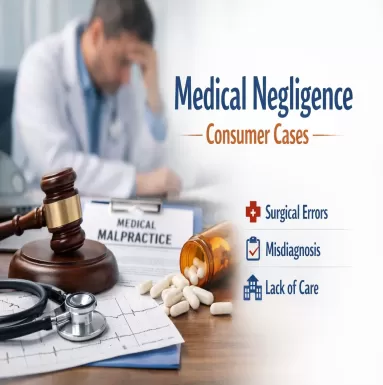
Medical Negligence Consumer Cases
Medical negligence consumer cases happen when a patient or their family thinks that a doctor, hospital, nursing home, clinic, or diagnostic center didn't give them the right care and that this caused them physical harm, financial loss, mental trauma, or unnecessary suffering. In short, Medical Negligence in Consumer Court: Basics means knowing how medical service disputes are presented in a consumer forum and which records are most important from the start. Many people think that a bad outcome automatically shows negligence, but in consumer cases, it usually depends on whether the treatment was below a reasonable standard of care, whether the patient was actually harmed, and whether the documents clearly show a link between the lapse and the loss.
For Indian families, especially middle class households and small business owners, a medical negligence case often starts after a painful hospital stay, an unexpected complication, a diagnosis that took too long, or a surgery that made things worse instead of better. At that point, people need clear legal information more than emotional promises. NCDRC Lawyers and Advocate BK Singh help clients figure out if their case has legal strength, if the records back up their claim, and if the dispute should go to the District Commission, State Commission, or National Commission based on the value and facts of the case. A careful start can make the difference between a weak complaint and a strong case of medical negligence.
1. What is considered medical negligence in consumer cases?
In consumer cases, medical negligence usually means that the doctor or hospital didn't do what was expected of them in terms of care, skill, or caution, and that mistake led to injury or made the patient's condition worse. There are many ways that a treatment mistake can happen, such as delaying surgery, giving the wrong medicine, not keeping an eye on vital signs, careless operation, poor infection control, ignoring emergency symptoms, not referring a serious case in time, or sending a patient home too soon. A consumer court looks closely at whether the service actually fell below acceptable standards, so just because a treatment didn't work doesn't mean the doctor was careless.
This is why the first question in Medical Negligence in Consumer Court: Basics is so simple. Was there a real lack of medical care, or was it just an unfortunate result of good care? When the facts show a clear mistake, like a wrong blood transfusion, surgery on the wrong site, missing consent for a major procedure, serious delay in seeing a patient, or failure to keep important records, a consumer complaint gets stronger. Advocate BK Singh usually tells his clients to focus on proof instead of anger. This is because consumer forums work best when there are clear timelines, treatment papers, and a well-explained chain of events.
2. How consumer forums deal with disputes over medical services
A complaint about medical negligence usually has to do with poor service, unfair treatment, lack of proper care, or not following normal medical precautions. The complaint should say who treated the patient, what happened, what symptoms or treatment steps were missed, when the damage became clear, what costs were incurred, and how the negligence affected the patient's health, income, and family life. Strong drafting doesn't use dramatic language; instead, it tells the story in a clear order. This is because consumer forums prefer accuracy, records, and practical explanations to emotional exaggeration.
This is where a lot of clients get Medical Negligence in Consumer Court: Basics wrong. They often think that the complaint should only talk about pain and unfairness, but a well-written complaint should also say what service failed and give proof of it. For instance, if a hospital delayed an emergency cesarean section and the child had problems as a result, the case should clearly state the time of admission, the symptoms, the doctor's notes, the gaps in monitoring, the timing of the operation, the NICU details, and the later medical effects. NCDRC lawyers write these kinds of complaints with a lot of care for structure because the way a medical service dispute is framed can have a big effect on how seriously the commission looks at the claim.
3. What records are most important in a medical negligence case?
In every case of medical negligence, records are very important because the case is based more on documents than on what people say. The most important papers are usually OPD slips, admission records, prescriptions, consent forms, investigation reports, operation notes, nursing charts, ICU notes, discharge summaries, medicine bills, implant bills, pathology reports, scans, follow-up advice, referral papers, a death summary if necessary, and any written communication between the family and the hospital. These papers help show what treatment was given, what warning signs were there, what decisions were made, and whether the records themselves show gaps, inconsistencies, or strange silence.
Medical Negligence in Consumer Court: Basics also teaches clients that missing records can be a big problem on their own. If a hospital takes too long to give papers, gives incomplete treatment sheets, or doesn't make consent and monitoring records, that weakness can hurt the hospital's case. In many real-life disagreements, the family only finds out later that the notes don't match what they saw or that the discharge summary hides important problems. BK Singh Advocate often tells his clients to quickly get certified copies of their documents and organize them by date. This is because good document control makes things clear, and clarity makes things credible in front of a consumer forum.
4. Common cases of medical negligence that Indian families have to deal with
Medical negligence in India frequently manifests in scenarios that typical families can readily understand, including misinterpretation of diagnostic tests, delays in addressing a heart attack, injuries during childbirth, incorrect medication dosages for children, failure to identify internal bleeding post-surgery, inadequate postoperative supervision, or the refusal to transfer a critical patient to a more adequately equipped facility promptly. Families also have problems when a hospital charges them but doesn't give them the right specialist care, makes them wait during a medical emergency, or doesn't explain the big risks before getting permission for a procedure. These problems affect not only health but also savings, jobs, and the stability of families.
One big mistake in the medical field can stop income and put long-term financial pressure on small business owners and families with jobs. A shop owner who can't move around after careless surgery or a working mother whose treatment is delayed because of careless hospital management may suffer both health problems and financial loss. That's why Medical Negligence in Consumer Court: Basics isn't an abstract legal subject for them. It is about knowing how to legally and practically hold medical professionals who are careless accountable. NCDRC Lawyers take care of these kinds of cases with a client-first approach that focuses on paperwork, realistic claims, and a clear explanation of how the situation will affect daily life.
5. How damages are determined in cases of medical negligence
In cases of medical negligence against consumers, hospital bills are not the only thing that counts. Consumer forums may look at medical bills, the cost of future treatment, lost income, pain and suffering, disability, loss of earning capacity, mental anguish, attendant costs, and how the negligence affected the patient's life and family as a whole. If someone dies, the complaint may also talk about how the negligent act affected their dependents, their age, their future prospects, and the emotional and financial stress it caused. The amount claimed should be reasonable, backed up by evidence, and related to actual loss, not just made up out of thin air.
People often look for money for medical negligence because they want justice, but how strong the claim is depends on how well the loss is explained and proven. Medical Negligence in Consumer Court: Basics means that just saying the patient was hurt isn't enough. The complaint should show how the negligence affected work ability, family costs, long-term treatment needs, and mental health. Advocate BK Singh usually takes a careful approach to compensation issues by connecting the claim to records, bills, professional impact, and the seriousness of the medical lapse. This helps present the case in a fair and legally sound way to the commission.
6. The role of expert opinion and a good legal strategy
Expert testimony can be helpful in medical negligence cases, especially when the case involves a complicated surgery, specialized treatment, ICU management, or a technical question about diagnosis and standard of care. In some cases, the records speak for themselves, but in others, an independent medical review can help explain how the hospital didn't do what a good medical provider should have done. A useful strategy doesn't just rely on technical terms. It depends on picking the right records, figuring out what went wrong, making a clear timeline, and presenting the case in a way that is both simple and legally sound.
A lot of weak complaints fail because they have too many accusations and not enough organized evidence. A better legal strategy focuses on the most important records, the strongest incidents, and the clearest explanation of what caused the problem. That is a big part of Medical Negligence in Consumer Court: Basics because consumer forums want to know exactly what went wrong and why it matters. NCDRC Lawyers and BK Singh Advocate usually work on carefully handling cases, reviewing documents, analyzing risks, and coming up with realistic next steps so that their clients don't go into medical litigation without knowing what to expect.
7. Time limits, forum selection, and filing method
In medical negligence cases, timing is important because waiting too long can hurt both the legal case and the chances of finding evidence. Families often spend months trying to understand the treatment, get hospital records, or deal with their grief before they think about taking legal action. It's always better to act quickly. The first steps in a proper filing process are usually gathering records, making a timeline of the facts, reviewing the law, and deciding where to file the complaint. The District Commission, State Commission, or National Commission should handle the case based on how much the claim is worth and how the dispute is set up.
In Consumer Court for Medical Negligence: Basics, you also need to choose the right court and file your complaint with discipline from the start. If you file a complaint too quickly and don't include all the necessary paperwork, it could cause problems later on. A lot of the time, a family already has enough proof but doesn't know how to put it all together. That's where Advocate BK Singh comes in. He takes all the scattered treatment papers and emotional pain and turns them into a clear legal case. The goal is not to make noise, but to file a clear complaint of medical negligence that a consumer forum can look into seriously.
8. Why careful guidance is important in cases of medical negligence
Medical negligence complaints are hard to deal with because they involve pain, trust, health, and often permanent effects. People who go to a lawyer in these situations are usually scared, confused, and not sure if the medical provider was really negligent or if the records will help their case. It's important to get good legal advice because the first step is not to file at any cost. The first step is to honestly assess the situation, look over the documents carefully, and have a realistic idea of whether the case has merit. That process keeps families from wasting time and money, and it also helps strong cases move forward more clearly.
For clients who need help with Medical Negligence in Consumer Court: Basics, the most important things are clear advice, careful writing, and handling cases based on strategy. NCDRC Lawyers and Advocate BK Singh work to help clients understand how strong their case is, which records are most important, and what the safest next step is in the complaint process. This kind of help can help middle-class families and small business owners make sense of things when medical records, money problems, and emotional stress all come together. A well-thought-out legal strategy won't make the damage go away, but it can help the client seek justice with confidence and respect.
Reviews from Clients
*****
Ritesh Malhotra
After my father's hospital treatment went wrong, I was completely lost. We didn't know if it was a real case of medical negligence or just a bad outcome. Advocate BK Singh went through the papers one by one and told us which records were important and which facts were the most important. His calm, practical, and honest approach gave my family a lot of confidence during a very stressful time.
*****
Meenal Arora
From the start, I liked that the advice was clear and realistic. BK Singh Advocate didn't make big promises. Instead, he focused on the treatment file, the discharge summary, and the timeline of events. That careful advice helped me understand how to write a complaint about medical negligence, and I felt like my case was being taken seriously.
*****
Saurabh Khanna
Because of careless hospital care, our family had both emotional and financial stress, and we needed someone who could explain things clearly without getting into legal trouble. Advocate BK Singh patiently listened to us and helped us figure out which documents were important and which points would really matter in front of a consumer forum. The advice seemed responsible, clear, and based on sound legal strategy.
*****
Neha Bedi
The clear communication was what stood out to me. NCDRC Lawyers didn't make things sound easy, but they did make the way clear and doable. Advocate BK Singh helped me organize the medical papers correctly and told me how medical service disputes are handled in consumer cases. This made me feel better at a very hard time.
*****
Tarun Sachdeva
When I was having trouble figuring out if the hospital's actions were negligent, I called Advocate BK Singh. The advice was fair and professional, and every conversation was based on facts, records, and the strongest legal arguments. That honest and careful handling made me feel supported, and I would say the whole thing was reassuring from start to finish.
?FAQs
Q1. In simple terms, what is a medical negligence consumer case?
A medical negligence consumer case is when a patient thinks that a doctor, hospital, clinic, or diagnostic center gave them bad medical care that caused harm, extra treatment, financial loss, or serious pain. The case usually looks at whether the service was bad and whether the treatment was below a reasonable standard of care.
Q2. Is every failed treatment an example of medical negligence?
No, not every treatment that doesn't work is medical negligence. There is always a chance that a patient won't get better even with the right treatment. When the records show a clear mistake, like a delay, wrong medicine, careless surgery, poor monitoring, missing consent, or not responding properly to a medical emergency, the case against the consumer gets stronger.
Q3. What records are the most important for a medical negligence claim?
Prescriptions, admission papers, discharge summaries, investigation reports, operation notes, consent forms, ICU charts, nursing records, medicine bills, referral papers, and follow-up records are some of the most important records. These papers help show what kind of care was given and if there was a big gap in medical care.
Q4. Can I take a private hospital to consumer court?
Yes, you can file a complaint against a private hospital or doctor if they provided medical care for payment and there is a claim of negligence or poor service. The facts, records, and how the dispute is legally presented all play a role in how well the complaint works.
Q5. Is it necessary to get an expert medical opinion in every case of medical negligence?
Expert opinion is not always needed, but it can be very important when the issue is very technical or when the records alone don't make the negligence clear. The treatment papers themselves strongly point to the lapse in some cases, while an expert review helps explain the standard of care and how it was not followed in others.
Q6. What kind of damages can you get in a case of medical negligence?
Compensation can cover things like hospital bills, future treatment costs, lost wages, pain and suffering, mental anguish, loss of income due to disability, costs for caregivers, and other financial or personal losses caused by the negligence. The amount should be reasonable and backed up by records, bills, and facts about the real loss.
Q7. How can I tell if my case should go to the District Commission, the State Commission, or the National Commission?
The right consumer forum usually depends on how much the claim is worth and how the law works in the case. A good legal review helps figure out where to file the complaint. It's important to file in the right place because doing it wrong can cause delays and confusion.
Q8. What should I do first if I think a doctor was negligent?
First, you should get all of your medical records, keep your bills, write down the full timeline of events, and make sure you don't lose any investigation reports or discharge papers. After that, a careful legal review can help you figure out if the case is a real medical negligence consumer case and what to do next.
Q9. If the patient has passed away, can family members file a complaint?
Yes, in many cases, family members or legal representatives can file a complaint if negligent medical care led to death or serious injury. For these kinds of things, you need to keep careful records, collect the right documents, and clearly explain both the negligence and the family's loss.
Q10. Why do I need legal advice before I file a complaint about medical negligence?
Legal advice can help you figure out if your case is worth pursuing, which records are important, how to write the complaint, and how much money you can reasonably ask for. It also helps keep you from writing poorly, making things sound worse than they are, and missing documents, all of which can make a real case weaker.
Are you having a legal problem in Medical Negligence Consumer Cases? You don't have to deal with it alone. Let's discuss your situation and explore the appropriate approach to handle it.
There is no pressure or difficult legal language, only clear information based on the circumstances of your Medical Negligence Consumer Cases matter.
Chat on WhatsApp +91-9654251599Schedule Your Consultation
