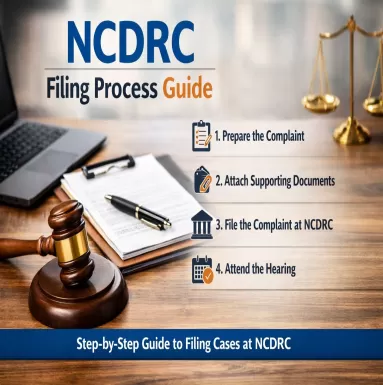
NCDRC Filing Process Guide
People who are looking for information about the NCDRC filing process usually just want to know where to file, how to file, what papers are needed, and what mistakes can slow things down. The Consumer Protection Act, 2019, says that the National Consumer Disputes Redressal Commission is the highest level of the consumer commission system. It handles some important consumer complaints, first appeals from State Commission orders, and revision cases in some cases. So the first thing you need to do is make sure that your case really belongs in front of the NCDRC and not another forum.
For a lot of Indian families and business owners, filing a consumer case is more stressful than the actual dispute because the process seems to involve a lot of paperwork and technical details. That's why it's important to take things step by step. It's easier to register, defend, and explain a properly prepared matter before the commission. Clients often come to NCDRC Lawyers and Advocate BK Singh with valid complaints but no clear plan for filing, the right order for the paperwork, or practical advice on how to follow NCDRC procedures from the very first draft.
1. What is the NCDRC filing process, and when does it apply?
When a consumer issue falls under the National Commission's authority, the NCDRC filing process is the legal way to go. The National Commission can look into complaints under the Consumer Protection Act of 2019 if the value of the goods or services paid for is more than the set monetary limit. It also hears first appeals against orders from State Commissions and can change decisions made by State Commissions if they were made outside of or in an unusual way within their jurisdiction.
This means that someone shouldn't file in the NCDRC just because the issue is serious or the other party is a big business. Jurisdiction is determined by the legal framework of the case, rather than by emotion alone. For instance, a flat buyer with a very high consideration value or a big insurance claimant may be able to go to the NCDRC, but a smaller consumer dispute may need to go to a District or State Commission. A wrong filing forum often leads to delays, objections, and extra costs. That's why BK Singh Advocate usually checks maintainability before writing anything else.
2. How to tell if your case is right for NCDRC
A good case for NCDRC usually begins with a clear disagreement between consumers and a clean set of papers that show the transaction, the problem, the unfair practice, the delay, the non-delivery, the bad service, or the denial of a rightful claim. If the problem is about a delay in housing, insurance refusal, medical negligence, a banking dispute, e-commerce non-refund, or any other consumer complaint, the main question is whether the person making the complaint is a consumer and whether the issue is within the National Commission's legal reach.
In real life in India, a lot of cases don't get filed because people bring incomplete invoices, unsigned contracts, unclear payment records, or emotional claims without any proof. A family might say that a builder cheated them, but if the payment trail isn't clear, the complaint isn't strong on day one. A small business may have a claim for a service deficiency, but the NCDRC process gets harder if it can't show how the service was hired and how the loss happened. Filing well doesn't mean adding more papers. It's about putting the right papers in the right order.
3. Documents that are usually needed to file a complaint in NCDRC
When people ask how to file a complaint with the NCDRC, the answer usually starts with papers, not arguments. The complaint should include the complainant's name, full address, transaction papers, proof of payment, correspondence, notice if any, screenshots if necessary, and all other evidence that shows how the dispute started and what relief is being sought. The complaint must also include the correct filing format and the required fee.
The most important papers in real life are often the agreement, invoices, allotment letter, policy papers, bank statements, emails, chats, courier proofs, warranty documents, expert reports, and the company's final demand or rejection letter. That record becomes very important if there was a promise of a refund, a discussion about a settlement, or a guarantee of service. NCDRC lawyers usually work on making a document chain that looks like a timeline. This is because a commission can understand a case faster when the paperwork tells the story in an organized way.
4. Step-by-step guide for filing a case with the NCDRC
The NCDRC process usually goes through a series of steps, starting with case assessment, jurisdiction review, drafting, arranging annexures, affidavits and verification, fee compliance, filing in the right format, scrutiny by the registry, removal of objections if they are raised, and then the admission stage. Every step is important because a valid case can be delayed if the filing structure is weak or missing.
This is easier to understand with a real-life example. Let's say a buyer paid a lot of money for a fancy apartment, but the builder kept asking for money and delaying the buyer's possession for years. In this case, the filing process would usually include checking the value, writing the complaint, attaching all payment receipts and letters, clearly stating what you want, and presenting the case in a way that follows the law. If the registry has a problem with pagination, attestation, indexing, or missing pages, those problems must be fixed right away. A lot of good cases lose steam because the filing was done too quickly and not put together professionally.
5. Clients need to know about online filing and limit issues.
A lot of people today also want to know if they can file an NCDRC claim online. People who live outside of Delhi or who want to start the case without having to travel back and forth a lot can now file electronically. Even so, filing online doesn't mean you don't need to write correctly, include all the necessary information, index everything properly, and present the case in a way that is legally sound.
Limitation is another area where a lot of real cases can become dangerous. A complaint must be filed within the legally permitted timeframe from the date the cause of action emerged. If someone waits too long, the case could be thrown out for delay, even if the complaint is real. Many customers keep sending reminders for months or years and think the delay won't matter, but once the case gets to the commission, the time limit can become a big problem. That's why getting legal advice quickly is often better than following up informally over and over.
6. Common mistakes that slow down or weaken NCDRC cases
One common mistake is writing an angry story instead of a well-organized complaint from a customer. Another is using language from the internet that is not true to the facts of the case. People also make mistakes that could have been avoided by making false claims about relief, mixing unrelated claims, missing important dates, or attaching papers out of order. When filing with the NCDRC, clarity is more important than volume. A shorter case that is well-supported usually does better than a long file with no legal direction.
Another big mistake is not knowing the difference between the original complaint, the appeal, and the revision. You can't switch these out. Someone who doesn't like a State Commission order may need to file an appeal, while someone else may be thinking about revisional grounds. The legal route changes the way documents are written, how limits are calculated, and the set of documents. Advocate BK Singh takes this classification stage very seriously because a lot of registry objections and maintainability problems start when the wrong proceeding is chosen at the very beginning.
7. How advocate BK Singh can help with your filing strategy
It's not just about the paperwork when you have a good filing strategy. It is about showing the disagreement in a way that makes sense legally and practically from the start. That means picking the right forum, figuring out the exact cause of action, carefully calculating the limitation, framing the reliefs correctly, and making sure that all of the annexures help the case instead of getting in the way of it. This stops middle-class families from wasting money. It lowers the chance of making mistakes in the process for small businesses when time is usually most important.
NCDRC Lawyers handles these cases with a client-first approach that emphasizes keeping records in order and giving realistic legal advice. Before filing, clients often need someone to explain what is worth fighting for, what should be dropped, what must be proved, and what can be improved. Clients often choose BK Singh Advocate for these kinds of cases because they want clear next steps, practical handling, and responsible representation instead of big promises that don't hold up in court.
8. Last tips before you file a complaint with the NCDRC
Before you file a complaint with the NCDRC, make sure you have the right forum, check the dates, put the papers in order of when they happened, and make sure the prayer clause matches the actual complaint. If you are appealing a State Commission order, keep in mind that there is a set amount of time by law for the appeal to be filed. However, delays may be allowed in certain cases. If you don't pay attention to that one detail, it could change the future of the case.
The safest way to go about it is to see filing as the most important part of the case, not just a formality. The quality of the first filing often affects how quickly and strongly the case will go forward, whether the issue is about housing, insurance, medical services, finances, or disputes over online purchases. A well-written complaint or appeal gives the commission a clear record, gives the client confidence, and gives the legal team a solid base from which to move the case forward with seriousness and order.
Reviews from Clients
*****
Raghav Malhotra
I had no idea how to file with the NCDRC or where my case should go. Advocate BK Singh made it very clear what the forum, documents, and next steps were. What I liked most was how calm and practical it was to look over my papers before filing. It made me feel better to know that the issue was being taken care of carefully and not quickly.
*****
Neeraj Sethi
I had a lot of paperwork for my consumer dispute, and I was worried that one wrong paper could slow things down. BK Singh Advocate helped me figure out which records were important and which ones I didn't need. The advice was clear, honest, and very down-to-earth. I felt like I had help during the preparation stage, especially when the registry-related issues were explained clearly.
*****
Anupama Vaid
I had read a lot of different things about how to file a complaint with the NCDRC, but most of them were hard to understand and said the same thing over and over. It finally made sense after I talked to Advocate BK Singh. The advice was clear, the drafting method was strict, and each step was explained before moving on. That kind of openness really helped me.
*****
Kunal Arora
What stood out to me was the focus on strategy instead of false hope. When I first got advice, my case papers weren't in the right order, and I now see that filing them that way would have caused problems later. Advocate BK Singh helped put the record in order, find missing points, and make the case much stronger. From start to finish, the support felt professional and real.
*****
Megha Tandon
I wanted someone who could help me with the NCDRC process without using big words or making the case sound impossible. That's exactly what I got. The legal advice was fair, useful, and easy to understand. I thought my case was being taken seriously, and the overall advice I got helped me relax a lot of the stress that had been building up for months.
?FAQs
Q1. How to file an NCDRC complaint in simple terms
The NCDRC filing process involves getting a consumer complaint, appeal, or revision matter ready and sending it to the National Consumer Disputes Redressal Commission in the right legal format. Usually, this means checking the jurisdiction, writing the case draft, putting together the annexes, filing with a fee, and fixing any problems that the registry brings up during the review process.
Q2. Can I file a complaint directly with the NCDRC?
You can only file a complaint directly with the NCDRC if your case is within the National Commission's jurisdiction. The legal value threshold and the type of case will determine whether or not original complaints can be filed with the NCDRC. Before filing, you should carefully check which forum to use because many disputes should go before District or State Commissions.
Q3. Is it possible to file NCDRC cases online?
For consumer issues, electronic filing may be an option, and it has made it easier for many people to start the process. But filing online doesn't mean filing casually. The complaint still needs to be properly documented, clearly written, correctly indexed, and presented in a way that is legally sound.
Q4. What papers do you usually need to file with the NCDRC?
Most of the time, you need proof of identity, proof of address, agreements, invoices, payment records, notice or email correspondence, screenshots if they are needed, and any record of a final rejection or deficiency. The exact set of documents needed depends on whether the problem is with real estate, insurance, banking, medical care, e-commerce, or another consumer issue.
Q5. How long do I have to file a complaint as a customer
A consumer complaint should generally be submitted within the legally mandated limitation period from the date the cause of action occurred. If there is a delay, the person who complained may need to explain why and ask for forgiveness. It's always better to act now than to wait and cause a problem with the limit.
Q6. What is the difference between an NCDRC complaint and an appeal?
When a case is within the NCDRC's jurisdiction, a complaint starts an original proceeding. An appeal is made against a decision made by a lower consumer commission, like a State Commission. The drafting style, limitations, and document requirements are all different, so it's important to classify the matter correctly from the start.
Q7. How long does it take for scrutiny to happen after filing?
There is no set timeline that works for every case because it depends on the quality of the filing, the workload of the registry, and whether any objections are made. The scrutiny stage can take longer if the papers are missing, not signed, poorly indexed, or incorrectly paginated. At this level, good filing preparation often saves time.
Q8. Can a small business also go to the NCDRC?
Yes, in some cases, but it depends on the facts and whether the case meets the legal definition of a consumer dispute. A small business owner should not automatically think they are eligible. When deciding whether something can be maintained, the purpose of the purchase or service, how it will be used, and the legal nature of the transaction all matter.
Q9. Do I need a lawyer for the NCDRC process?
The law doesn't require legal representation in every case, but for cases with a lot of money or that are hard to understand, it's usually a good idea to get professional help. The NCDRC process includes checking for jurisdiction, writing discipline, planning annexures, and legal presentation. A lawyer can help you avoid making mistakes that will cost a lot to fix later.
Q10. Why do so many NCDRC cases take longer or get weaker?
Most of the time, delays happen because the wrong forum was chosen, documents were missing, there were issues with the limitations, the reliefs were unclear, or the drafting was bad. A lot of people only care about filing quickly and not about filing correctly. A strong case starts with a clean record, a clear timeline, and a case structure that makes sense from a legal point of view.
Are you having a legal problem in NCDRC Filing Process Guide? You don't have to deal with it alone. Let's discuss your situation and explore the appropriate approach to handle it.
There is no pressure or difficult legal language, only clear information based on the circumstances of your NCDRC Filing Process Guide matter.
Chat on WhatsApp +91-9654251599Schedule Your Consultation
