NCDRC vs SCDRC jurisdiction limit
A consumer case can look strong on facts and still get delayed because it is filed before the wrong forum. That is exactly where the NCDRC vs SCDRC jurisdiction limit becomes practical, not academic. Many complainants focus only on compensation, refund, mental agony, interest or penalty, but the forum is mainly tested on the value of goods or services paid as consideration.
In India, consumer disputes may involve builders, insurance companies, hospitals, banks, airlines, coaching institutes, online sellers, finance companies or service providers. A person may feel that a claim worth several crores should directly go to the National Consumer Disputes Redressal Commission. That assumption can be risky. The legal test may still send the complaint to the District Commission or State Commission if the consideration paid falls within those limits.
This article explains the practical difference between NCDRC and SCDRC jurisdiction, when a case belongs before the State Commission, when it belongs before the National Commission, and why valuation must be checked before drafting. For consumers, businesses and families across Delhi NCR and India, correct forum selection saves filing time, legal cost and procedural embarrassment.
For consumer matters, NCDRC Lawyers focuses on forum selection, complaint drafting, appeals and consumer litigation guidance. Advocate BK Singh & Advocate Sadhna Singh regularly advise clients on whether their dispute should be filed before the District Commission, SCDRC or NCDRC.
Delhi and India forum choice in 2026
The NCDRC sits at New Delhi, but its jurisdiction is national. SCDRC matters are handled by State Commissions, including Delhi, Uttar Pradesh, Haryana, Maharashtra, Karnataka and other States. That is why a consumer from Noida, Gurugram, Ghaziabad, Mumbai, Bengaluru, Chennai or Kolkata must first check the correct pecuniary slab before thinking of filing.
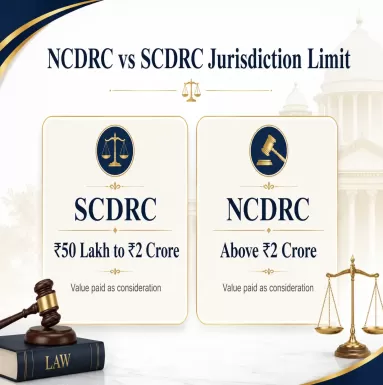
As per the revised jurisdiction rules, District Commissions handle complaints where the value of goods or services paid as consideration does not exceed ?50 lakh. State Commissions handle complaints above ?50 lakh and up to ?2 crore. The National Commission handles complaints above ?2 crore. These limits were notified under the Consumer Protection jurisdiction rules and are also reflected by the NCDRC’s public information.
For city-focused consumer searches, this article treats Delhi as the primary city because NCDRC is located in New Delhi and Delhi NCR has high filing demand. The separate page topics should be kept distinct: NCDRC Lawyer in Delhi, SCDRC Lawyer in Delhi, and District Consumer Court Lawyer in Delhi. These should not be merged into one generic article because each forum has a different filing route, appeal path and practical use.
Quick facts for NCDRC vs SCDRC jurisdiction limit
- District Consumer Commission: consideration paid up to ?50 lakh.
- State Consumer Commission: consideration paid above ?50 lakh and up to ?2 crore.
- National Consumer Commission: consideration paid above ?2 crore.
- Compensation claimed alone does not decide the forum.
- The test is linked to value paid as consideration for goods or services.
- NCDRC also hears appeals and revision matters from State Commission orders.
- Wrong forum selection can cause delay, return, objection or dismissal at admission stage.
What does NCDRC vs SCDRC jurisdiction limit mean?
The NCDRC vs SCDRC jurisdiction limit means the monetary boundary that decides whether a consumer complaint should be filed before the National Commission or the State Commission. The key figure is usually the value of goods or services paid as consideration, not the highest compensation figure written in the complaint.
A simple example makes this clear. If a consumer paid ?1.40 crore to a builder and alleges delay, defects and unfair trade practice, the original complaint will normally fall before the SCDRC, because the paid consideration is above ?50 lakh but within ?2 crore. If the paid consideration exceeds ?2 crore, the complaint may fall before the NCDRC.
Many clients get this wrong because they calculate jurisdiction by adding refund, interest, compensation, litigation expenses and mental harassment. In my practice, I have seen draft complaints where a ?35 lakh transaction was inflated with ?3 crore compensation only to justify NCDRC filing. That approach can invite maintainability objections.
Advocate BK Singh & Advocate Sadhna Singh usually begin by checking receipts, payment schedules, bank entries, builder-buyer agreements, insurance premium documents or service invoices before deciding the forum. The forum is not chosen by emotion. It is chosen by the statute.
Which legal provisions decide the correct consumer forum?
Consumer forum jurisdiction is governed by the Consumer Protection Act, 2019 and the Consumer Protection (Jurisdiction of the District Commission, the State Commission and the National Commission) Rules, 2021. Sections 34, 47 and 58 of the Act deal with District, State and National Commission jurisdiction, while the 2021 Rules revised the monetary limits.
The National Commission’s own public information states that complaints may be filed before the District Commission up to ?50 lakh, before the State Commission from above ?50 lakh up to ?2 crore, and before the National Commission above ?2 crore. It also clarifies the three-tier structure of District Commissions, State Commissions and NCDRC.
A 2025 Supreme Court development is also relevant. The Supreme Court upheld the validity of fixing consumer forum jurisdiction on the basis of the value of goods or services paid as consideration under Sections 34, 47 and 58 of the Consumer Protection Act, 2019. The reasoning supports a structured hierarchy rather than forum shopping through exaggerated compensation claims.
This means valuation must be treated as a drafting foundation. Advocate BK Singh & Advocate Sadhna Singh look at whether the matter is an original complaint, appeal, revision, execution or transfer-related issue before advising the proper consumer forum route.
How are NCDRC and SCDRC different in real filing terms?
NCDRC is the National Consumer Disputes Redressal Commission. It is placed at the apex of the consumer commission structure. SCDRC means State Consumer Disputes Redressal Commission, which functions at State level. Both forums deal with consumer disputes, but their original complaint jurisdiction is not the same.
The State Commission is not a weaker forum. For many high-value builder, insurance, medical, education, vehicle, banking and service disputes, SCDRC is the correct original forum. If the consideration paid falls between above ?50 lakh and ?2 crore, filing directly before NCDRC may create an avoidable maintainability issue.
NCDRC becomes relevant for original complaints above ?2 crore in paid consideration. It is also relevant for appeals against State Commission orders and certain revision matters. That is why a client may reach NCDRC even when the original complaint began before a District Commission or State Commission.
For appeal-related matters, the service page on NCDRC appeal filing lawyer can be used naturally where the dispute has already passed through State Commission adjudication. Advocate BK Singh & Advocate Sadhna Singh generally separate original filing advice from appellate strategy because both require different pleadings.
Can compensation alone take a case to NCDRC?
No. A high compensation claim alone does not automatically take a consumer complaint to NCDRC. The present structure gives weight to the value of goods or services paid as consideration. This avoids a situation where a party chooses a higher forum merely by writing a very large compensation figure.
Suppose a consumer paid ?48 lakh for a service and claims ?5 crore as compensation due to alleged negligence. The compensation may be serious, but the original forum may still not become NCDRC merely because the relief amount is large. The complaint must be examined under the statutory jurisdiction test.
This point matters in medical negligence, builder delay, vehicle defect, insurance rejection and education refund matters. People often feel that emotional harm, delay, financial pressure and mental agony should increase the forum level. The law does not work that simply.
Advocate BK Singh & Advocate Sadhna Singh usually advise clients to keep claim valuation realistic, supported by documents and legally structured. Overvaluation can weaken a genuine case because the opposite party may attack maintainability before merits.
Practical forum table for consumers
| Forum | Present pecuniary range | Common use |
|---|---|---|
| District Consumer Commission | Up to ?50 lakh | Lower-value goods, services, refunds, defects and local disputes |
| State Consumer Commission | Above ?50 lakh to ?2 crore | Builder delay, insurance, high-value service and major refund disputes |
| National Consumer Commission | Above ?2 crore | Large consideration disputes and national-level original consumer complaints |
| NCDRC appellate route | Against SCDRC orders | Appeals, revisions and strategic challenge to State Commission orders |
This table should be treated as a starting point, not a substitute for legal review. Territorial jurisdiction, limitation, maintainability, consumer status, commercial purpose objections and documentary proof can also affect filing.
Who should read this before filing a consumer complaint?
This guidance is useful for homebuyers, policyholders, patients, online shoppers, students, vehicle owners, banking customers, travel consumers, senior citizens, investors and business-linked service users who are unsure whether to approach District Commission, SCDRC or NCDRC.
A builder-buyer dispute may involve payments above ?50 lakh but below ?2 crore. An insurance claim may involve a denied policy benefit, but the premium or service consideration may need separate analysis. A medical negligence matter may involve high alleged loss, yet the paid treatment consideration and legal framing need careful assessment.
Companies and service providers also need this clarity. A wrong objection or wrong forum argument can waste hearing dates. When defending a consumer case, the first check is often jurisdiction, limitation and whether the complainant qualifies as a consumer.
For State Commission matters, the page on SCDRC Lawyer for State Consumer Commission fits naturally for readers comparing State-level consumer filing. Advocate BK Singh & Advocate Sadhna Singh assist both complainants and respondents in understanding the correct litigation route.
What is the safe filing sequence from dispute to forum choice?
A safe consumer filing sequence begins with documents, not drafting. First, collect the invoice, allotment letter, policy schedule, payment proof, agreement, emails, WhatsApp messages, complaint history, refund requests, warranty records and any written denial from the opposite party.
Next, calculate the value paid as consideration. Do not start with compensation. Check the actual amount paid for the goods or services. In builder cases, this may include instalments paid. In insurance matters, premium and policy structure may require careful legal treatment. In service disputes, invoices and receipts become central.
After valuation, check territorial jurisdiction. A consumer may file where the opposite party works, where cause of action arose, or where the complainant resides or works, subject to statutory conditions. Online filing through e-Daakhil can help, but forum selection still needs accuracy.
Then prepare a clear complaint. The pleading should explain deficiency in service, unfair trade practice, product defect, negligence or non-refund in a structured manner. Advocate BK Singh & Advocate Sadhna Singh usually keep the prayer clause strong but not inflated beyond documentary support.
Documents that decide forum and maintainability
Consumer complaints often fail at the first gate because documents do not support the valuation or the relationship. A signed agreement, payment proof and written grievance can be more valuable than a long emotional statement. Strong documents reduce confusion at admission.
For builder matters, keep the allotment letter, builder-buyer agreement, payment receipts, demand letters, possession offer, delay correspondence and cancellation or refund communication. For insurance matters, keep policy schedule, premium proof, claim form, repudiation letter, surveyor communication and medical or damage records.
For banking, loan, wallet, card or online transaction disputes, preserve account statements, transaction IDs, complaint numbers, emails, SMS alerts and escalation records. In education refund matters, collect admission forms, fee receipts, refund policy, counsellor messages and class non-delivery proof.
A consultation with Advocate BK Singh & Advocate Sadhna Singh should ideally happen before drafting, because jurisdiction and evidence must match. The page on consumer court lawyer may be used for general consumer complaint guidance.
Timelines, delay pressure and admission risk
The Consumer Protection Act aims for speedy disposal, and the government’s public note refers to an endeavour to decide complaints within three months from notice where no testing is required and within five months where testing is required. Real timelines can vary depending on forum load, pleadings, notices, evidence and adjournments.
Limitation is another serious issue. Consumer complaints are generally expected to be filed within the prescribed limitation period from the cause of action, subject to condonation where sufficient cause is shown. Delay must be explained properly. A weak delay explanation can create risk even in a meritorious claim.
Wrong forum filing can consume valuable months. If a complaint is returned or dismissed for want of jurisdiction, the consumer may face fresh filing, limitation objections and additional expense. That is why forum choice should be checked at the notice and drafting stage itself.
Advocate BK Singh & Advocate Sadhna Singh often advise clients not to wait until the last date. Early review helps identify missing invoices, unclear payments, wrong opposite party names and forum valuation mistakes.
Mistakes that damage NCDRC and SCDRC matters
The first mistake is treating compensation as the sole jurisdiction figure. The second is filing before NCDRC because the case feels serious. Seriousness and jurisdiction are different concepts.
Another common error is mixing appeal and original complaint routes. A party aggrieved by an SCDRC order may approach NCDRC through the correct appellate or revisional remedy, but that does not mean every fresh complaint can start at NCDRC.
Some complainants add every possible company, director, employee and platform without checking contractual relationship. That can make notice service and pleading clarity harder. Others forget to attach payment proof, which is the very basis of pecuniary jurisdiction.
A poor prayer clause also creates trouble. Asking for refund, interest, compensation, litigation cost and directions is normal when justified. Inflating figures without support can invite objections. Advocate BK Singh & Advocate Sadhna Singh prefer a sharp complaint over a dramatic one.
Risks of ignoring jurisdiction before filing
Ignoring jurisdiction can lead to registry objections, admission-stage questions, maintainability disputes and wasted hearings. A consumer who has already suffered delay from a builder, insurer, hospital or service provider should not lose more time due to wrong forum selection.
For respondents, jurisdiction defects can become a strong preliminary defence. If the complaint is filed before the wrong forum, the opposite party may seek dismissal or return before the merits are examined. That can shift the entire litigation calendar.
A wrong forum also affects strategy. Evidence, court fee, drafting style, appearance planning, appeal route and urgency applications may change depending on whether the case is before District Commission, SCDRC or NCDRC.
Clients in Delhi NCR often search for NCDRC directly because the National Commission is located in New Delhi. That is understandable, but not enough. The actual question is whether the paid consideration crosses the NCDRC threshold.
When should you consult a consumer court lawyer?
Speak to a consumer court lawyer before filing if the paid consideration is near ?50 lakh or ?2 crore. Borderline cases require careful calculation because even a small valuation mistake can shift the matter from District Commission to SCDRC or from SCDRC to NCDRC.
Legal advice is also useful where multiple payments exist, joint buyers are involved, part refund has been made, cancellation has occurred, interest is claimed or several opposite parties are named. Builder and insurance matters often need this review.
You should also consult a lawyer if the opposite party has already raised a jurisdiction objection, limitation objection or commercial purpose defence. These objections are not routine paperwork. They can decide whether the case proceeds at all.
Advocate BK Singh & Advocate Sadhna Singh provide practical consultation for filing strategy, drafting review, appeal assessment and consumer forum representation across Delhi NCR and major Indian cities.
How ncdrclawyers.com can help with forum selection
The role of legal assistance is not only to draft a complaint. Good consumer litigation begins with choosing the correct forum, identifying the right opposite parties, checking limitation, arranging documents and framing reliefs that match the evidence.
For Delhi-based readers, the guide on how to file consumer complaint in Delhi can support local filing awareness. For NCDRC and SCDRC matters, the drafting must stay aligned with the pecuniary jurisdiction limits.
Advocate BK Singh & Advocate Sadhna Singh can review whether a consumer matter belongs before District Commission, SCDRC or NCDRC. They can also assess whether an order should be challenged through appeal, revision or execution-related steps.
If your dispute involves builder delay, refund denial, insurance rejection, banking deficiency, medical negligence, defective product, travel loss or service failure, forum choice should be checked before filing. That one step can save months.
Frequently Asked Questions
1. What is the current NCDRC vs SCDRC jurisdiction limit?
SCDRC generally handles original consumer complaints where the value of goods or services paid as consideration exceeds ?50 lakh but does not exceed ?2 crore. NCDRC handles original complaints where the paid consideration exceeds ?2 crore.
2. Is compensation included for deciding NCDRC jurisdiction?
Compensation claimed is not the main test for pecuniary jurisdiction under the present structure. The forum is generally decided by the value of goods or services paid as consideration, subject to legal review of the facts.
3. Can I file directly before NCDRC for mental harassment?
Mental harassment may support compensation, but it does not by itself decide NCDRC jurisdiction. The paid consideration must be checked first. Advocate BK Singh & Advocate Sadhna Singh can assess the correct forum.
4. What happens if I file before the wrong consumer forum?
The complaint may face registry objection, maintainability challenge, return or dismissal. Fresh filing may then be required, and limitation issues can arise depending on the delay and facts.
5. Is SCDRC only for appeals?
No. SCDRC hears original complaints within its pecuniary jurisdiction and also hears appeals from District Commission orders. The route depends on whether the matter is fresh or already decided below.
6. Does NCDRC hear appeals from SCDRC orders?
Yes. NCDRC can hear challenges from State Commission orders through the proper statutory route. The limitation, deposit requirement and grounds must be checked before filing.
7. Which forum hears a ?1.5 crore builder dispute?
If the paid consideration is ?1.5 crore, the original complaint usually falls before the SCDRC because it is above ?50 lakh and within ?2 crore.
8. Which forum hears a ?2.5 crore consumer dispute?
If the value paid as consideration exceeds ?2 crore, NCDRC may have original pecuniary jurisdiction, subject to territorial, limitation and maintainability checks.
9. Can a Delhi consumer file before NCDRC because it is in New Delhi?
Not merely for that reason. NCDRC location does not override pecuniary jurisdiction. A Delhi consumer must still check the value paid as consideration and the correct statutory route.
10. What is the role of District Consumer Commission?
District Commission handles lower-value consumer complaints up to the prescribed pecuniary limit. It is often the correct forum for refunds, defective goods, service issues and local consumer disputes.
11. Do online purchases also come under consumer forums?
Yes, online purchase disputes can be consumer disputes if the complainant qualifies as a consumer and the facts show defect, deficiency, unfair trade practice or non-refund.
12. Is limitation important in NCDRC and SCDRC cases?
Yes. Limitation can affect maintainability. Delay should be explained with documents, correspondence and cause of action details. Early filing is safer than waiting.
13. Should I send a legal notice before filing?
A legal notice is often useful because it records the grievance, demand and timeline. It may also create settlement pressure. The need depends on the facts and urgency.
14. Can Advocate BK Singh & Advocate Sadhna Singh help with both SCDRC and NCDRC matters?
Yes. Advocate BK Singh & Advocate Sadhna Singh advise on consumer complaint filing, SCDRC matters, NCDRC appeals, jurisdiction review and consumer dispute strategy.
15. What city keywords should be used for Delhi consumer pages?
The separate Delhi page keywords should be NCDRC Lawyer in Delhi, SCDRC Lawyer in Delhi, and District Consumer Court Lawyer in Delhi. Each should be treated as a dedicated page topic.
A careful forum choice saves time
The NCDRC vs SCDRC jurisdiction limit is one of the first checks in any serious consumer case. A strong complaint can lose momentum if it starts before the wrong commission. Paid consideration, not emotional value alone, usually guides the forum.
Consumers should not guess the forum based on the size of compensation claimed. They should check payments, documents, cause of action, territorial jurisdiction and limitation before filing. That is especially true in builder, insurance, medical negligence, banking and high-value refund disputes.
For practical review, Advocate BK Singh & Advocate Sadhna Singh can help identify whether the matter belongs before District Commission, SCDRC or NCDRC. Correct filing does not guarantee success, but it gives the case a cleaner start.
Disclaimer: This article is for general information only and is not legal advice.
Are you having a legal problem in NCDRC vs SCDRC jurisdiction limit? You don't have to deal with it alone. Let's discuss your situation and explore the appropriate approach to handle it.
There is no pressure or difficult legal language, only clear information based on the circumstances of your NCDRC vs SCDRC jurisdiction limit matter.
Chat on WhatsApp +91-9654251599Schedule Your Consultation
